The 8 Cheapest States for Car Insurance in 2026
On the other end of the scale, drivers in these states pay less than half what high-cost states do. Here's the data — and a free way to see how your own rate compares.
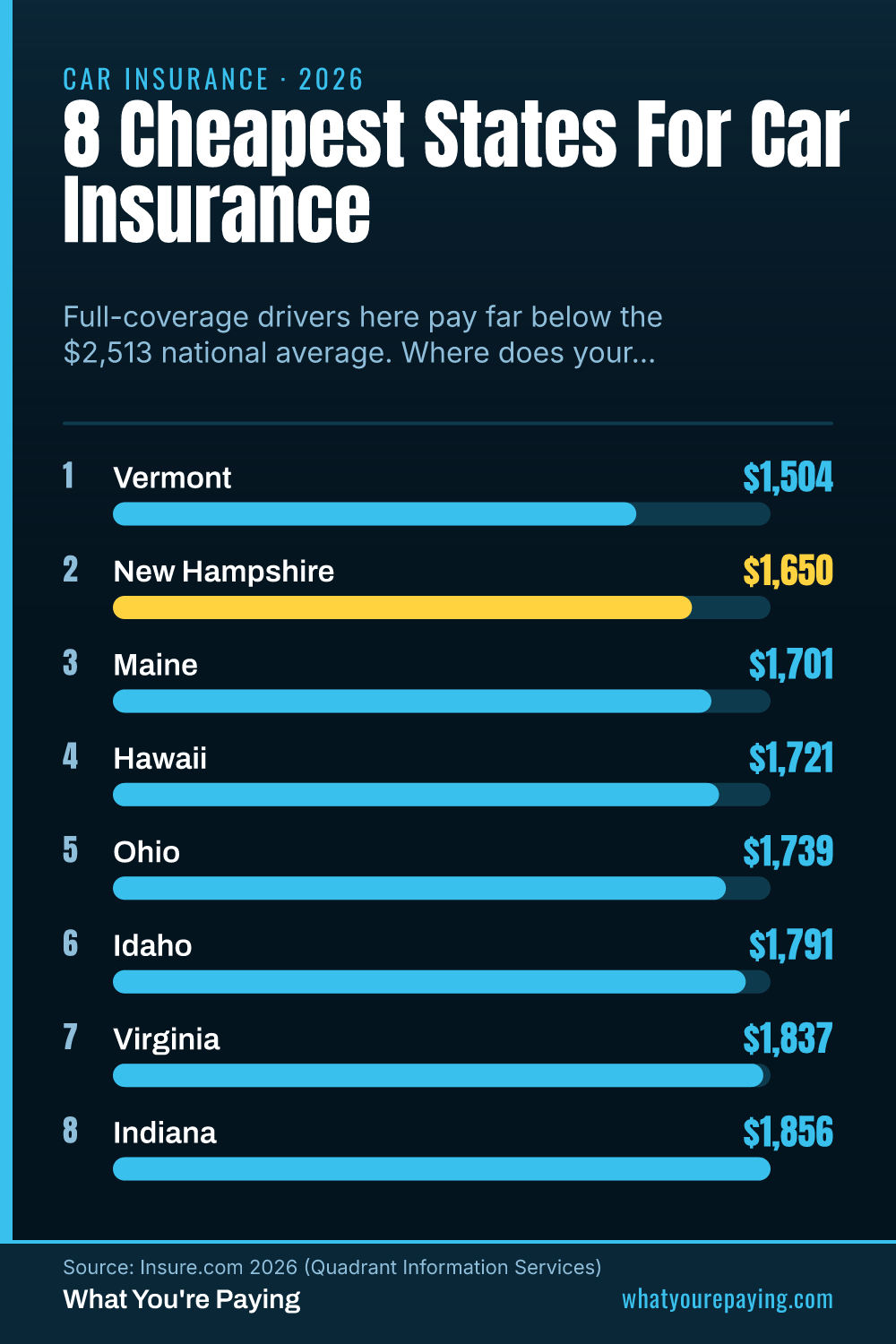
Not every driver is getting crushed. In the cheapest states, full-coverage car insurance runs around $1,500–$1,850 a year — less than half what drivers in Louisiana or Florida pay for the same protection.
Per Insure.com's 2026 analysis, Vermont is the cheapest in the country at $1,504 a year, followed by New Hampshire ($1,650) and Maine ($1,701). The common thread: smaller populations, less congestion, fewer thefts, and fewer severe-weather claims keep risk — and prices — down.
📩 Get the free 2026 Car Insurance Rate Report (all 50 states)
See exactly where your state ranks and the 7 factors that move your rate most. Free, no obligation.
But here's the catch most drivers miss: even in a cheap state, your specific rate depends on your insurer, your credit, your car, and your history — and two companies can quote the same person hundreds of dollars apart. Living in a low-cost state doesn't mean you've got the lowest-cost policy.
The only way to know if you're actually getting a good deal is to compare. It's free, it takes about two minutes, and it doesn't change your current coverage unless you want it to.
Compare Car Insurance Rates — Free, 2 Minutes →Common questions
If I live in a cheap state, do I still need to shop around?
Yes. State averages hide big differences between insurers. The same driver can be quoted hundreds of dollars apart, so comparing is still worth it.
What makes these states cheaper?
Lower population density, fewer accidents and thefts, and less severe-weather risk all push premiums down.
Is comparing free?
Yes — free and no obligation. You only switch if a better rate is worth it.
Sources
- Insure.com 2026 — Car insurance rates by state